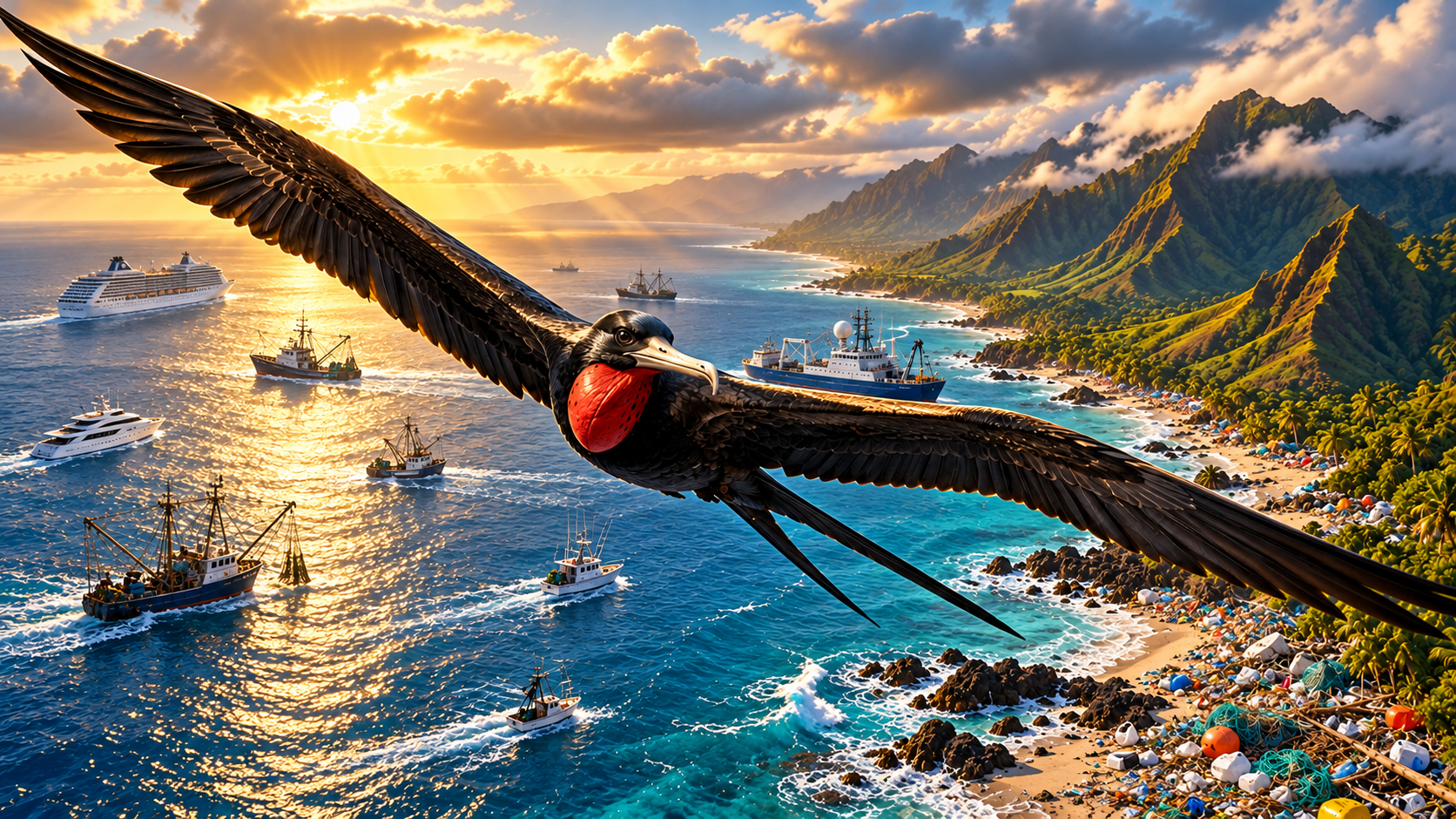
Images Created by Jeff Mustard using ChatGPT.
A fishing net can outlast the job it was made to do. Lost or abandoned, it can remain in the water as an entanglement hazard, catching animals without anyone there to bring the catch aboard.
Papahānaumokuākea Marine Debris Project reported removing 47,000 pounds of debris during its September 14–October 8, 2026 mission in the Northwestern Hawaiian Islands. The published breakdown includes 28,730 pounds of in-water net, 15,290 pounds of shoreline net and 2,980 pounds of shoreline plastic. The locations included Lalo, Kamole, Kapou, Manawai, Hōlanikū and Kuaihelani.
These operations took place in Papahānaumokuākea, not at Kamilo Beach. That geographic distinction matters.
The connection is a broader Hawaiian and Pacific challenge: equipment made for human use can continue affecting wildlife and habitats after it is discarded or lost.
NOAA describes this continuing capture as ghost fishing. Nets and lines can trap or wrap around fish, turtles, birds and marine mammals. Removing large material from reefs requires specialist knowledge and care; it is not the same task as picking up a loose bottle on dry sand.
In Saving Big Blue, different creatures contribute different abilities to a coordinated response. Real removal work offers its own lesson in shared effort: planning, field skills, transport and sustained support all matter. The spectacular moment is only one part of a much longer undertaking.
Follow the people doing that work. Learn how discarded gear is reported in your area, support an established removal organization, and let trained responders handle entangled wildlife or hazardous gear. There is room to participate without assuming every useful action must happen underwater.
Take a first step
Support trained debris-removal teams and use local reporting channels. Leave entangled wildlife and hazardous gear to qualified responders.
Explore Hawaiʻi conservation resources — https://www.savingbigblue.com/get-involved#help-in-hawaii
Sources and further reading
Papahānaumokuākea Marine Debris Project — PMDP Mission 3 of 2026 — project results — Mission September 14–October 8, 2026; results checked October 18, 2026 — https://www.pmdphawaii.org/projects-1 NOAA Marine Debris Program — Derelict Fishing Gear — background reference — https://marinedebris.noaa.gov/what-marine-debris/derelict-fishing-gear