
Small Bottle Caps Can Have Big Consequences
An August 2026 cleanup report puts familiar bottles and caps near the top of the litter list. For ocean wildlife, ordinary objects can carry extraordinary consequences.
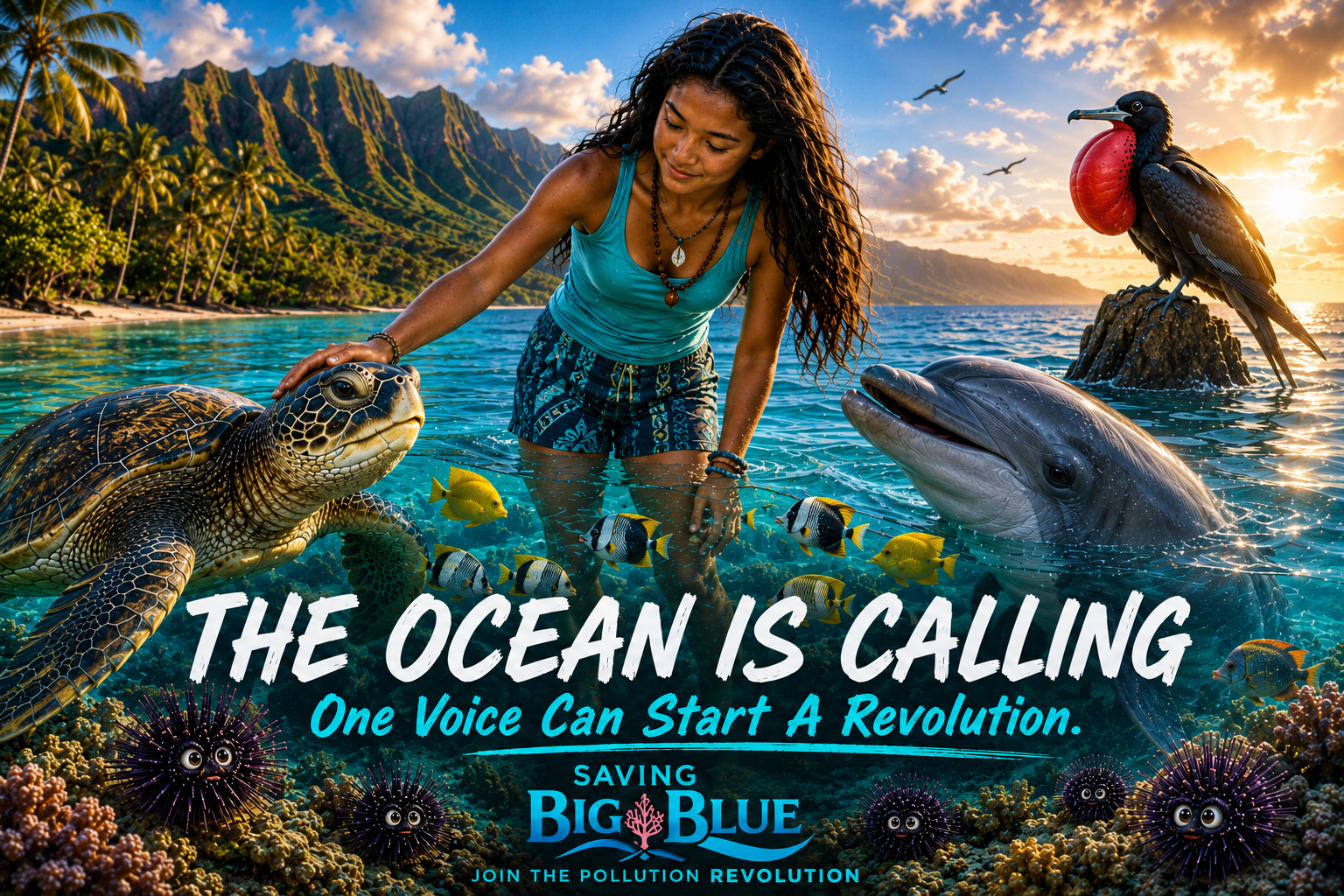
Images Created by Jeff Mustard using ChatGPT.
We recognize a bottle cap almost without thinking. It belongs to a drink, a lunch break, a moment that is quickly over. In the ocean, its story may continue long after ours has moved on.
Ocean Conservancy’s August 26, 2026 release reported results from the 2025 International Coastal Cleanup: volunteers recorded 1,338,712 plastic bottles and 885,854 caps. Bottles were the most frequently collected item; caps ranked third. These are volunteer cleanup records, not a census of every piece of plastic in the sea.
The release connects those familiar objects with wildlife research. It highlights hard plastics such as caps as particularly dangerous when swallowed by seabirds, and describes an albatross that died after ingesting a whole plastic bottle. An item does not need to look threatening to become a threat.
For a family story, that changes the scale of the problem. Ocean pollution is not only something enormous on the horizon. It can be something small enough to disappear beneath a bird’s beak, or something a person barely notices beside a path.
Saving Big Blue imagines the ocean as a shared home, populated by characters with relationships, hopes and vulnerabilities. Looking at an everyday object from their side of the shoreline makes an abstract issue personal.
The humor and music belong to the fictional world; the reason to care reaches beyond it.
A practical response can begin with how we use, collect and dispose of familiar items. Refill where feasible, secure waste so it cannot blow away, and participate in a local cleanup that records what volunteers find.
Repeated observations can reveal patterns that a single glance would miss.
Take a first step
Make the small items count: reduce avoidable single-use waste and join a cleanup that records the debris it collects.
Find ways to reduce ocean plastic — https://www.savingbigblue.com/get-involved#reduce-ocean-plastic
Sources and further reading
Ocean Conservancy — New Beach Cleanup Report Reveals Plastic Beverage Bottles and Caps Most Prevalent Pollutants Worldwide — August 26, 2026 — https://oceanconservancy.org/newsroom/press-release/2026/08/26/plastic-bottles-caps-icc-report.