
What Washes Ashore Has a Story
A Hawaiʻi research collaboration traced discarded fishing gear across the Pacific. It is a reminder that protecting a shoreline begins with understanding what arrives there—and why.
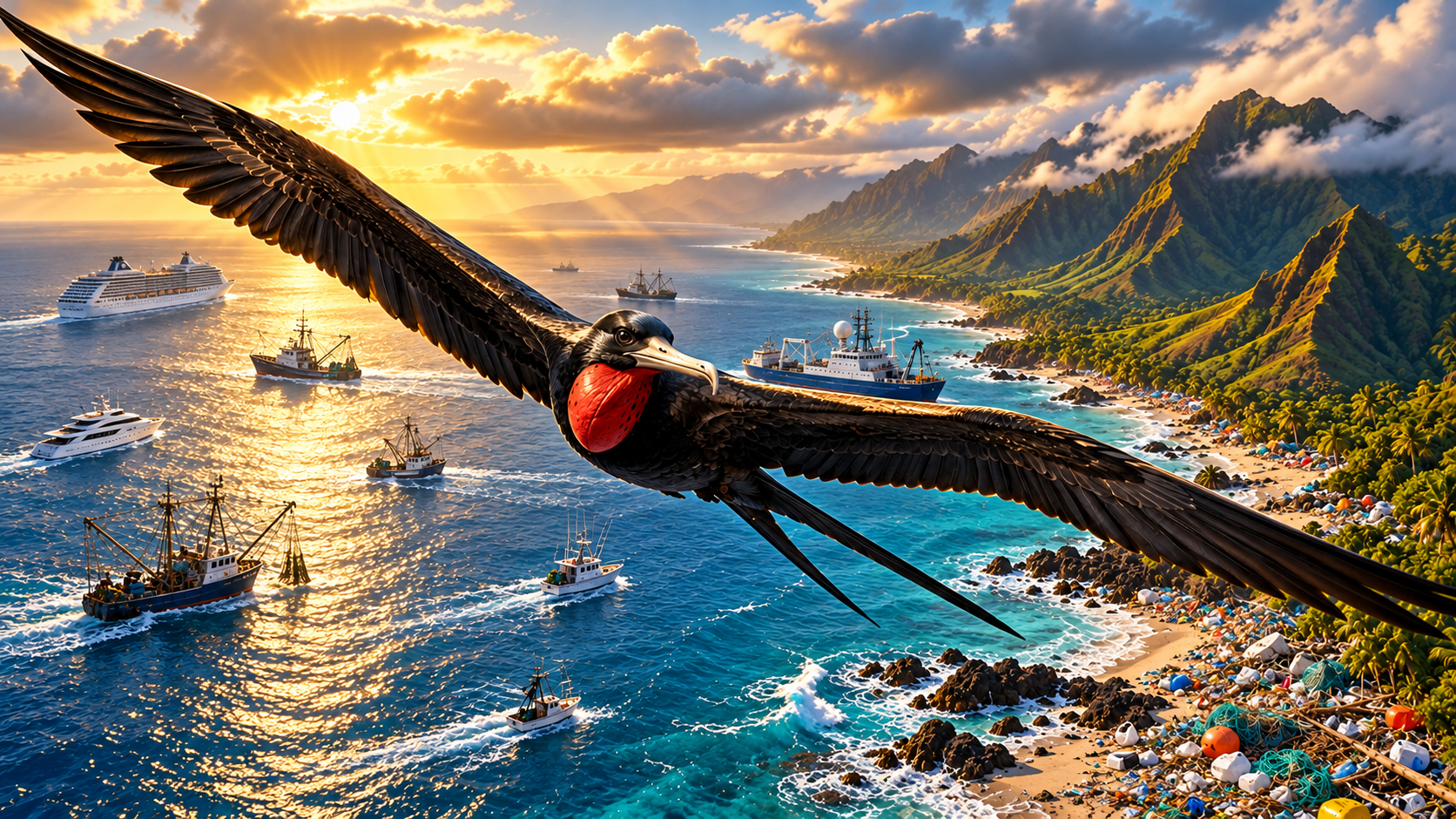
Images Created by Jeff Mustard using ChatGPT.
A piece of plastic on a Hawaiian shoreline can be the last visible chapter of a journey that began far away.
Picking it up matters. Understanding where it came from can help prevent the next piece from arriving.
In a June 19, 2026 update, Hawaiʻi Wildlife Fund described a multinational study of discarded eel- and hagfish-trap gear. Participants examined material collected across the Hawaiian Archipelago to investigate its origins and help prevent further pollution.
The update reported more than 21,891 pieces collected between 2021 and 2024, described wildlife injuries, and discussed traceability and prevention. Those findings concern a particular type of debris; they do not establish the source of every item on a Hawaiian beach.
That distinction matters at Kamilo Beach, the real place anchoring the fictional world of Saving Big Blue. A shoreline should never be reduced to a nickname or a photograph of someone else’s waste. It is a place people care about, and a habitat shared by lives above and below the water.
The film imagines those connected lives through humans, marine creatures and birds. The research offers a real-world reason to think in the same connected way: a local problem can require knowledge, cooperation and responsibility across an ocean.
Start by learning from the people doing the work. Explore Hawaiʻi Wildlife Fund’s research update and its volunteer opportunities, or visit our Get Involved page to find a route into participation.
Take a first step
Learn what a cleanup organization records as well as what it removes. Debris observations can help connect local action with prevention.
Explore Hawaiʻi organizations — https://www.savingbigblue.com/get-involved#help-in-hawaii
Sources and further reading
Hawaiʻi Wildlife Fund — HWF Marine Debris Research Supports International Pacific Eel Trap Fishery Study — June 19, 2026 — https://www.wildhawaii.org/hwf-marine-debris-research-supports-international-pacific-eel-trap-fishery-study/